
The world is full of places nobody's talking about.
A first letter from Hidden Wonders, about the gap I kept falling into and the small, quiet thing I'm building to fill it.

Every time my wife and I try to plan a trip, the same thing happens. We open six tabs. We watch four YouTube videos. We read three “10 best” lists that all recommend the same restaurant. We close the laptop more confused than when we started.
The travel internet is loud. It is optimized for clicks, ranked by SEO (maybe not for long?), and increasingly written by an algorithm trying to please another algorithm. What it is not optimized for is the thing we’re actually looking for: a place to feel something.
You know the gap I’m talking about. Somewhere between booking the Airbnb and finding the right hotel, between TripAdvisor’s top ten and Reddit’s overrun threads, there’s a missing layer. The neighborhood where locals actually eat. The concert venue tucked behind an unmarked door. The market that comes alive at 6 AM and is empty by nine. The parts of a city that make a place feel like a place, and not just a backdrop.
That layer is what I’m trying to build.
What it is
Hidden Wonders is a website. You open it, a globe is already spinning, you tap to stop it. It lands on a city. Not Paris, not Tokyo. Cities like Essaouira, Luang Prabang, Kanazawa, Oaxaca. Places that are extraordinary but overlooked. Each city gets a quiet guide of 10 to 20 recommendations, written like a friend who lives there would write them. No affiliate links. No booking widgets. No AI itinerary generator. Just stories, specifically told.
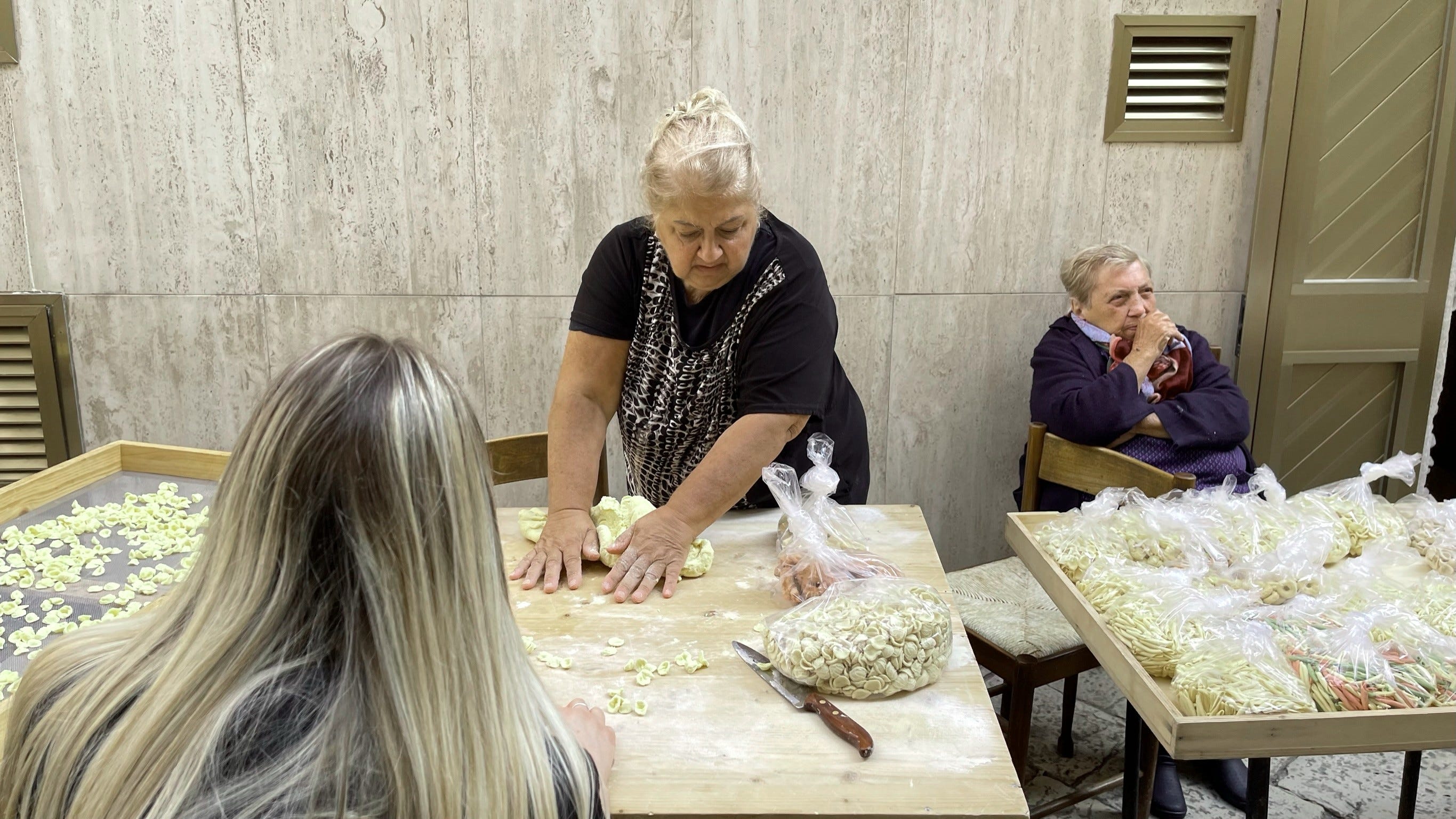
A few years ago, my wife and I traveled with my parents and we skipped the obvious places in Italy and picked somewhere we’d never heard anyone talk about: Bari. We’d stumbled across some article about Puglia’s olive oil, the culture down there, something about it being more authentic than anywhere else on the boot. On our first grocery run, a woman at checkout looked at us like we’d committed a crime. We hadn’t brought our own bags. In Bari, that’s not an environmental statement. It’s a cost-of-living reflex. We drank Primitivo every night, the real thing, not the watered down version you find labeled as something from Sicily. That single decision to land in Bari unraveled into Alberobello, Monopoli, and a string of coastal towns we never would have found if we’d followed the usual playbook. No crowds. No one performing for tourists. Just a region that revealed itself because we were willing to start somewhere unfamiliar.
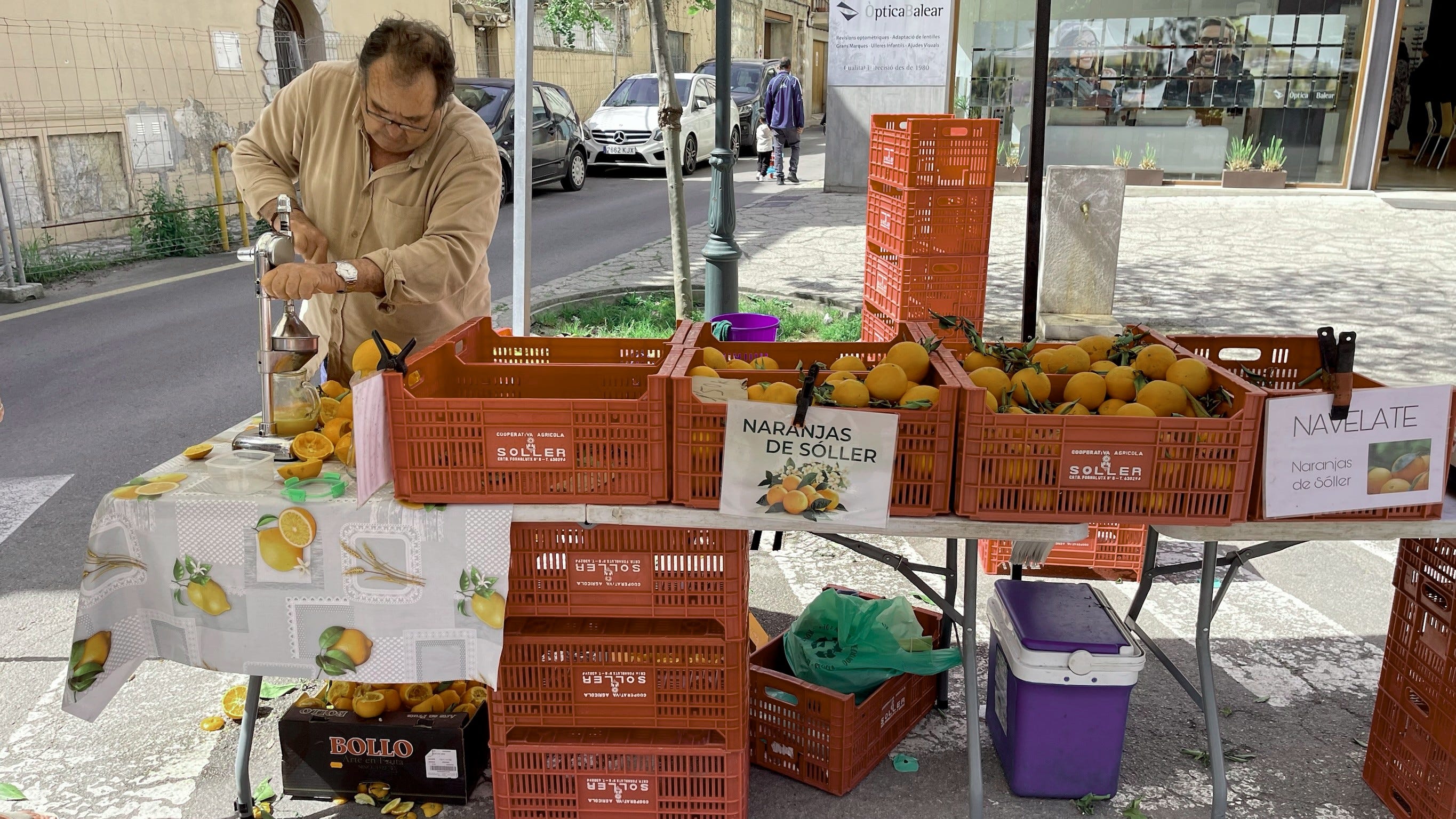
More recently, in Mallorca, we (Stacy & Mom) chose Pollença, forty-five minutes into the countryside from Palma. We could have stayed in Magaluf, a place infested with crowds, but a town that felt deliberately apart from everything became the base for discovering the rest of the island. We drank beer at La Birreria multiple nights where they projected YouTube videos of American rock onto the wall. We found Anima e Farina, a wine shop that also makes focaccia so good it doesn’t need a Michelin mention to justify itself. None of it was in a guide. All of it was the trip.
That’s the feeling underneath everything I’m building here. Spin, land, discover. The whole product in three words.
The Bourdain test (He probably would hate this honestly)
Anthony Bourdain’s Parts Unknown and Kitchen Confidential set the bar for how I want this to feel. Real, honest, and with a genuine sense of character. I’m Brazilian, I could never write like him. But the way he approached places, no judgment, no agenda, letting a place reveal itself, nobody has been able to replicate that. Every recommendation we publish has to pass one question:
Would Bourdain feel at home with this?
If a piece of writing reads like a brochure, we kill it. If it reads like something you’d say to a friend over drinks, like “you’ll know the place by the blue door, knock twice,” we keep it. Specificity over volume. Surprise over consensus. A real human voice over the smoothed-out algorithmic one.
The first city - Gosh this is hard ...
The first city we built is Essaouira, on the Atlantic coast of Morocco. Wind-carved ramparts, blue boats lined up on the sand at dawn, the smell of grilled sardines and Gnaoua music drifting out of a doorway. It’s the kind of city that doesn’t show up on the front page of the travel internet. And that is exactly the point.
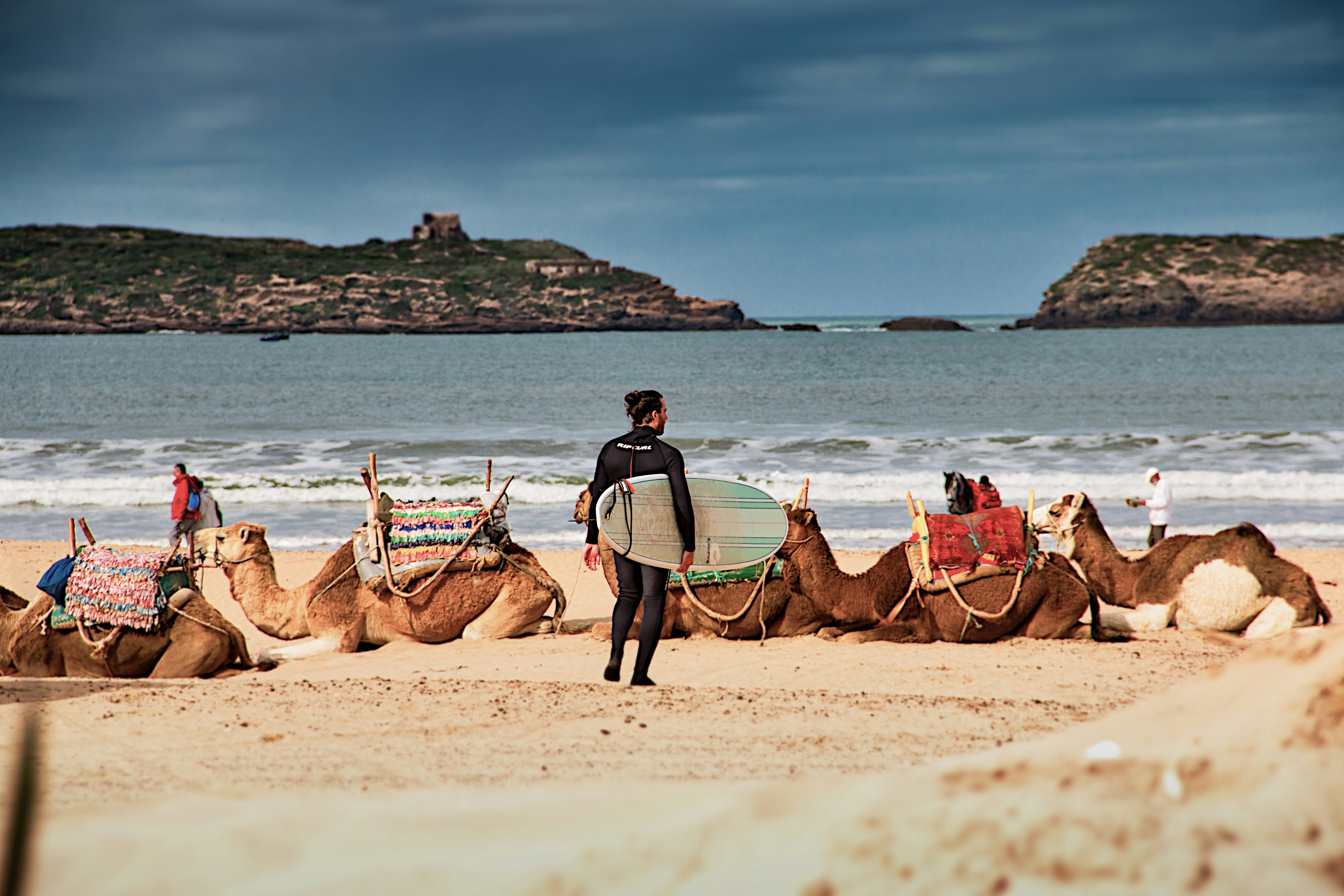
The reveal is the moment everything radiates from. A photograph at eye level. Never a skyline, never a drone shot. A single line of text that gives you the feeling of the place before it tells you the name. We hold on that frame for a second longer than feels comfortable. The pause is the point.
How it looks, and why
I spent more time on the visual system than I probably should have, and I have no regrets. The whole site is built from four colors and three typefaces. That’s it. Nothing more. The constraint is the design.
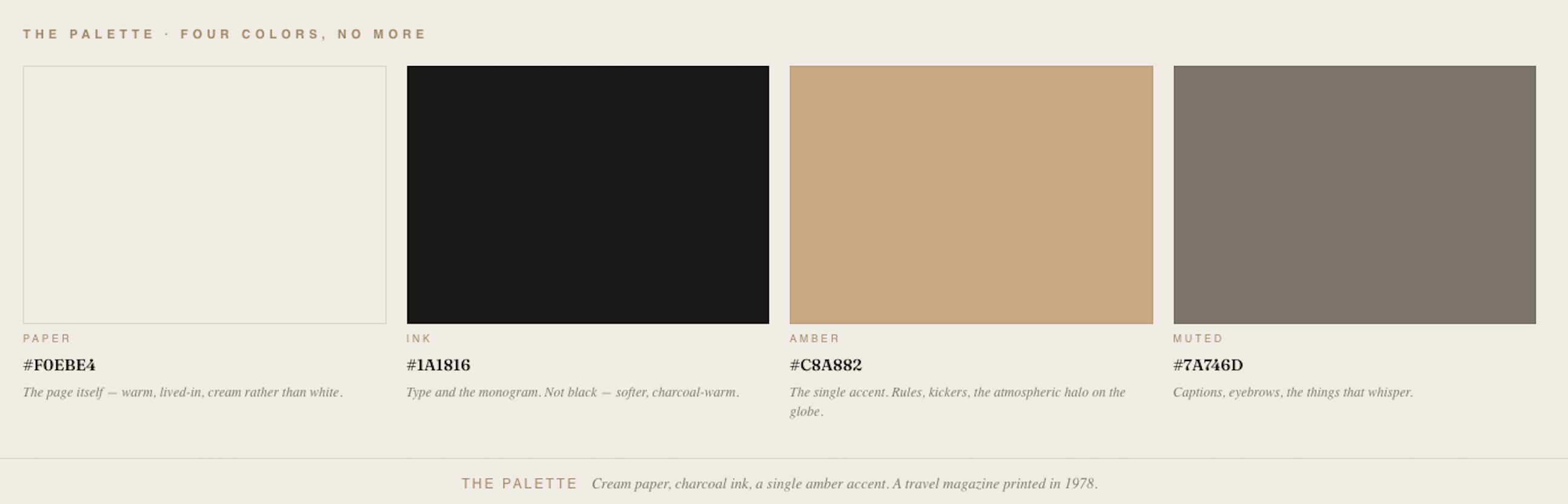
Paper, ink, amber, muted. The whole product is built on those four. It looks like a small-format travel magazine you’d find in a used bookshop, printed somewhere in the late seventies and still readable today. That’s not nostalgia for its own sake. It’s a quiet promise. This thing was made by a person. It will not flash at you. It will not chase you for a click.
A note on the AI slop
I want to be honest about something. We are living through the largest flood of half-finished, machine-extruded content the internet has ever seen. Most of it isn’t bad in a malicious way. It’s bad in a tired way. A lot of it is people using AI to feel like they’re being creative, without actually doing the harder, slower work that creativity requires. The output looks fine. It just doesn’t mean anything.
I use AI too. It helps me write faster, ship a prototype in a weekend, untangle a bug. But I think there’s a difference between using a tool to amplify a point of view, and using a tool as the point of view. The first one is craft. The second one is a feed.
In a world that’s about to get much shittier with content nobody actually wants to read, I think quality wins the long game.
Rodrigo Cordeiro - May 2026.
I won’t write here often. Not weekly, not on a content calendar, not in the cadence the algorithm rewards. I’ll write when I have something to say. When a city is finished, when a design decision is worth defending, when something I learned is worth passing on. That’s the whole promise. Fewer letters, each one made carefully. The opposite of the firehose.
Hidden Wonders has no immediate plan to monetize. No ads, no affiliate links, no premium tier, no sponsored cities. I don’t know yet what the business model is, and I’m okay not knowing. Figuring that out before the product is good would be the wrong order of operations. For now, the only goal is to make something I’m proud of, and to find the few thousand people who want a quieter corner of the travel internet.
How you can help
The biggest bottleneck on this project is, honestly, me. There are only so many cities I can research from a desk in Portland, and the whole point is to write about places from the inside. If you live in, or know somebody who genuinely lives in, a city that belongs on this globe, I’d love to talk. Not for free labor. For collaboration. A guide who can walk me through the neighborhood beneath the postcard.
The cities I’m circling next: Bologna, Stone Town, Tbilisi, George Town, Luang Prabang, Kanazawa, Oaxaca, Valparaiso, Natal.
If you have roots in any of these, or somewhere I haven’t thought of yet, write me at hello@hiddenwonders.co. Tell me about your place. The thing only a local would know. The story that doesn’t fit a list.
What’s next
The product launches publicly later this year with ten seed cities. Essaouira is the first one finished. Nine more to go. I’ll write here when each one lands.
Subscribe below to follow along. Until then, I’ll see you in the margins.
- Rod